
The best use is the one somebody will actually buy
You have a parcel. Everyone agrees it has potential — it’s been on the map as future industrial for years, it’s shown up in two strategic plans, and a broker has walked it a handful of times. There have been three conversations that felt real and then went quiet.
Nobody has ever written down what the site can actually support. Not the gross acreage — the developable acreage, after the drainage way, the easement, the setback, and the corner nobody can get a truck into. Nobody has costed the path from what it is to what it’s being marketed as. And nobody has answered the only question that matters: which specific buyer signs, and why would they choose this over the site in the next county.
Aspiration is not a development path
Almost every stalled parcel we’re brought into has the same three things wrong with it, in the same order.
It's being marketed at gross acreage
The listing says 400 acres. The developable footprint, once you net out floodplain, wetlands, slope, easements, buffers, and the access constraint, is 240 — and a site selector's civil consultant figures that out in an afternoon. When your number doesn't survive first-round diligence, the credibility problem outlives the deal.
It's positioned for the biggest imaginable user
A megaproject would be transformational, which is exactly why it's the use everyone defaults to. But a site positioned for a $1B campus it can't serve is invisible to the 300,000-square-foot regional distributor it could close in eighteen months. Ambition isn't free — it costs you the buyer you had.
The real blocker is a constraint nobody mapped
We've worked a park with acreage, utilities, and a motivated anchor user that couldn't be developed because there was no permittable highway access. Everyone involved was working the funding. The actual problem was 1,200 feet of roadway geometry, and it was solvable — once somebody sequenced the question correctly instead of louder.
Highest and best use is a discipline with a real definition: the use that is physically possible, legally permissible, financially feasible, and maximally productive. We add a fifth test, because the first four can all pass on paper while nothing sells: marketable — to an identifiable buyer, in a definable timeframe, at a price somebody has actually paid in this market.
Map it. Screen it. Cost it. Sell it.
Six to ten weeks from kickoff to a go-to-market plan. The rule: no use case advances on enthusiasm. Every recommendation carries a constraint check, a cost figure, and a named buyer category with transaction evidence behind it.
What you actually have, in acres you can build on.
Physical: topography and slope, soils and geotechnical risk, drainage and floodplain, wetlands and waters, karst or other regional geology, and cultural resources exposure. Legal: ownership and control, easements, encumbrances, restrictive covenants, and the entitlement path — current zoning, comprehensive plan designation, and specifically who holds the approval and how long they take. Access: roadway geometry and permitting authority, truck routing, rail service reality, and whether the access you're assuming is permittable or merely adjacent. Utilities: capacity and deliverability to the parcel line, not to the general area.
A constraint map, a net developable acreage figure you can defend in diligence, and a fatal flaw list — the things that must be resolved before any use case is real.
The full universe, then the honest cut.
Every plausible use enters: regional distribution and warehouse, light industrial and flex, advanced or specialized manufacturing, food and agribusiness, data center or other large-load, energy, mixed employment, phased subdivision, and — always on the list — hold in current use. Each is specified against real requirements: acreage and configuration, power and water, truck court depth and clear height, rail need, labor draw, and buyer timeline expectations. Then screened against Phase One, with fatal flaws applied before anyone builds a value case.
Then the market test. What has actually transacted in this market and at what price. What competing supply exists inside the same search radius, because your site is not evaluated alone. Absorption history, and where your parcel sits in the queue behind sites that are further along.
A tiered use case shortlist — viable now, viable after specified investment, and eliminated with the reason recorded. The eliminations are the point; a use case list that never cuts anything is a wish list.
What it costs to become the thing you want to be.
For each surviving use: order-of-magnitude development cost, logical phasing, timeline to marketability, and the specific gap-closure investments in sequence — which one unlocks the next, and which one unlocks nothing on its own. We model the tradeoff most owners never see written down: sell or develop at a lower use sooner, against invest and reposition for a higher use later, with holding costs, carrying risk, and the probability of the buyer showing up both included.
A ranked use recommendation with a value case, a costed and phased development path, and an honest read on which scenario is worth the wait.
Who signs, and who calls them.
Buyer profile built out concretely: the user categories that fit, the developer and investor types that build for them, the brokers and site selection consultants who actually transact in that segment, and the trade channels where those buyers look. Positioning and messaging written for that audience specifically — including the site profile and RFI-ready data package a consultant expects to receive. Deal structure options: fee simple, ground lease, option, build-to-suit partnership, or developer joint venture, with the tradeoffs stated plainly. Then a phased action plan with owners and dates attached.
A go-to-market plan, a target buyer and developer list, a site profile built for a skeptical audience, and the first ninety days sequenced.
We don’t want the listing
Land strategy advice usually arrives from someone with a position in the outcome. A broker’s highest and best use is reliably the use they can list fastest. An engineering firm’s is the one that requires the most engineering. An appraiser gives you a defensible number for a lender on a specific date — which is a different product than a plan, and was never meant to be one. We don’t broker the land, we don’t take a commission on the transaction, and we don’t design the infrastructure we recommend.
"Hold it" is an available answer
Sometimes the recommendation is that the market for your preferred use is four years out and the right move is patience, or a lower use that funds the wait. That answer pays us nothing extra.
We're an appraisal and engineering consumer, not a provider
This is not a USPAP appraisal and we are not licensed appraisers. Where the question requires an appraisal, a geotechnical program, or a stamped engineering assessment, we scope it, tell you what to ask for, and read the result critically.
We know which claims survive diligence
"400 acres, shovel-ready" invites a correction. "240 net developable acres, rail-served, 12MW deliverable at the parcel line by Q2 2028" invites a site visit. That difference is the entire value of first-round credibility.
You get an answer you can take to a skeptical board
Including, when it applies, the finding that the use case in your last strategic plan should be retired.
Structured for owners, boards, and partnerships
Fixed fee, never hourly
You know the number before we start, and it doesn't move when scope clarifies.
Weeks, not quarters
Six to ten weeks from kickoff to a go-to-market plan. Land decisions tend to wait on a study that arrives after the buyer has already picked somewhere else.
Phase gates, not a black box
Each phase ends with a deliverable and a decision. Continue, pause, or stop — Phase One alone tells you whether the rest is worth doing, and it stands on its own either way.
You get the workbooks, not just the report
The constraint map, the screening matrix, the cost and phasing models, the source registry. You can recreate any number from first principles, and you can re-run the screen when a constraint clears.
Built for boards, councils, and funders
We'll help you build the approval packet, present to your board or council, and package the outcome for the state, the utility partner, or the funder underwriting the infrastructure.
We work with your team, not around it
Your staff learns the site as we document it. When the engagement ends, the knowledge stays in the building — and the next inbound inquiry gets a real answer the same week.
Good fit
- EDCs and EDOs holding land they've never had assessed against outside standards.
- Private and family landowners with a strategic parcel and no development path.
- Redevelopment commissions, land banks, and port authorities with acreage that arrived faster than the strategy for it.
- Certified tech parks deciding what to put where. Utilities and institutions with surplus property.
- Communities that have just been offered a site and need to know what they'd be taking on.
- Owners whose parcel has been marketed unsuccessfully for three or more years.
Typically 3 to 25 staff. Based in Indiana, working nationally.
If ownership or control is unresolved — undivided heirs, an unsigned option, a boundary dispute — Phase One will surface it and the rest of the engagement will wait on it, which is worth knowing before you spend the money.
And if a decision-maker has already committed publicly to a specific use, understand that this methodology eliminates things. If nothing can be cut, you don’t need a strategy. You need a brochure, and somebody else should write it.
We are direct about fit during the discovery conversation. If a full engagement isn’t the right entry point, we’ll tell you what is.
Two sites, two very different answers
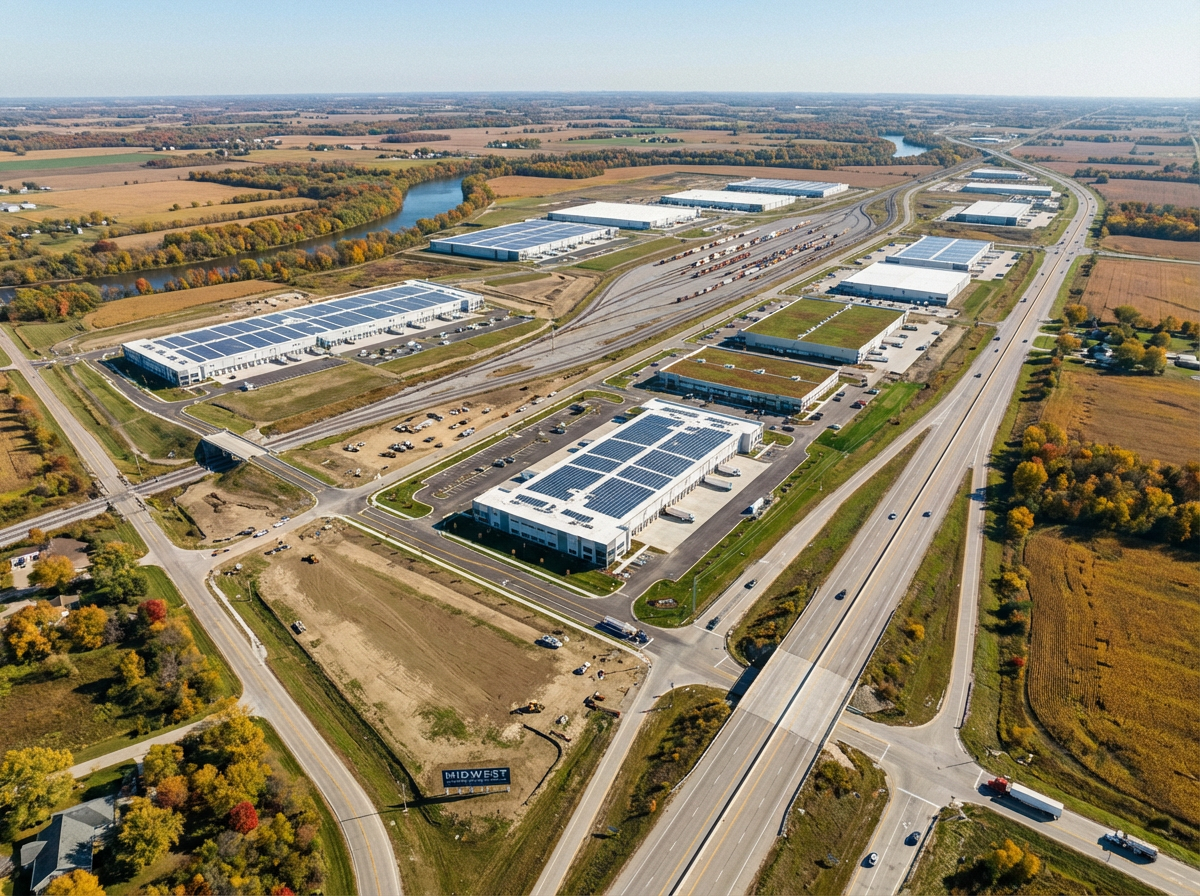 Land Development Strategy
The 400+ Acre Challenge
A major Midwest EDC needed to turn 400+ undeveloped acres into a marketable industrial asset. A four-phase analysis identified the optimal use case — and the answer, because the site could carry it, was ambitious: potential for $500M–$1B in capital investment and 1,000–2,000 high-wage jobs.
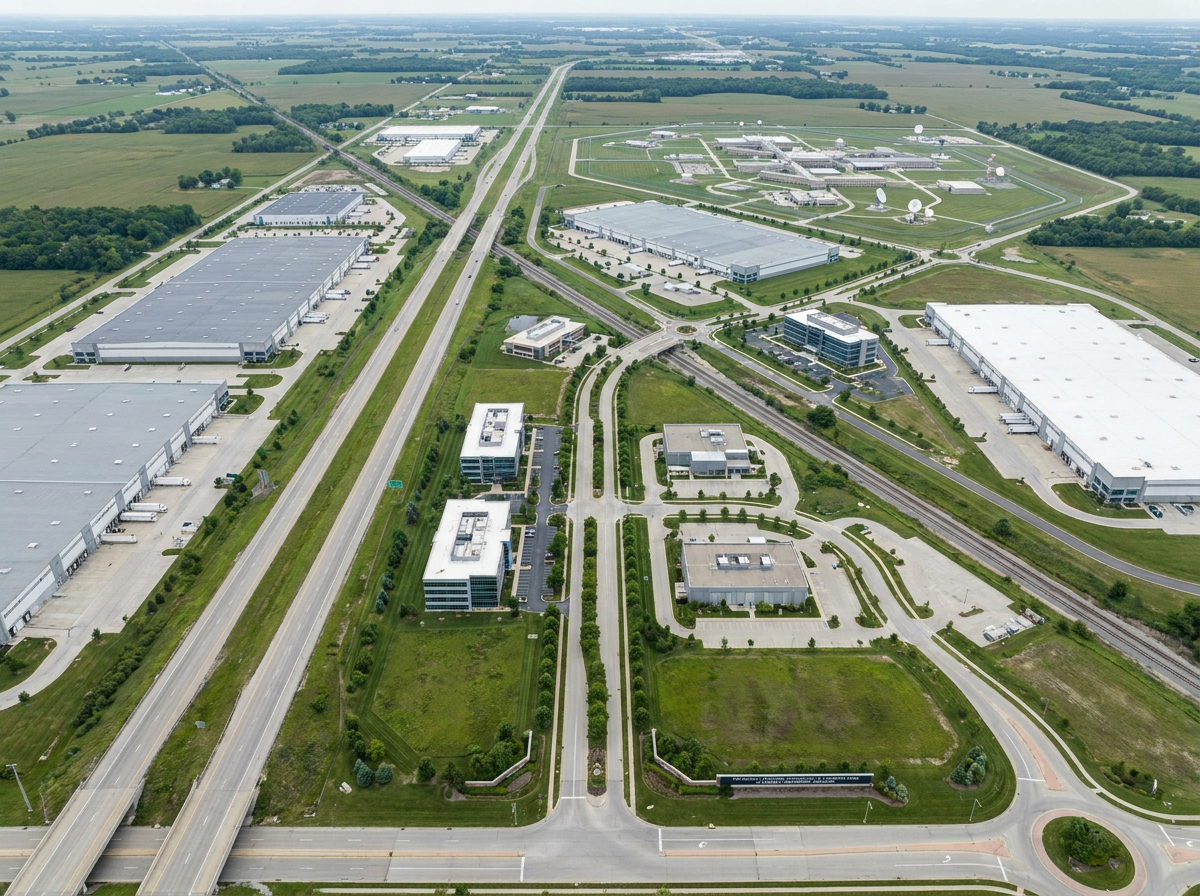 Land Development Strategy
A Park With No Way In
A private industrial developer had acreage, utilities, and a motivated anchor user — and no permittable highway access. Everyone was working the funding. We reordered the sequence and found the path: two viable alignments, no federal review triggered, five months at a fixed fee.
Often paired with
Regional Utilities Study
When the binding constraint is power or water, the parcel-line answer isn't enough. Substation-level deliverability with dates attached.
Certified Site & Economic Development Strategy
Once the use case is set, the gap closure and documentation work that makes the site certifiable and diligence-ready.
Target Industry Study
The regional version of the same question, when the asset in play is a portfolio rather than a parcel.
More on land, constraints, and positioning
What “Shovel-Ready” Actually Means
The term has drifted so far from its original meaning that it now creates more confusion than confidence. Here’s what site selectors actually check.
From Dirt to Deal-Ready
The step-by-step framework for moving a strategic parcel from raw land to a site that closes — with the constraint and cost logic behind each stage.
What Site Selectors Actually Want
The criteria that decide which sites make the list — and which ones get quietly set aside before the phone ever rings.
Start with a conversation
No pitch deck required. Tell us the parcel, what you’ve been marketing it as, and who has walked away. We’ll tell you honestly whether you need the full engagement, a constraint diagnostic on Phase One alone, or a different buyer for the site you already have.
20 minutes, no cost.
Schedule a Fit CallOr email [email protected]