
A few years ago, the questions on a data center site screen were predictable. Power. Fiber. Land. Water. Tax structure. Speed to approval.
That last one used to be a line item. Today it is the whole ballgame.
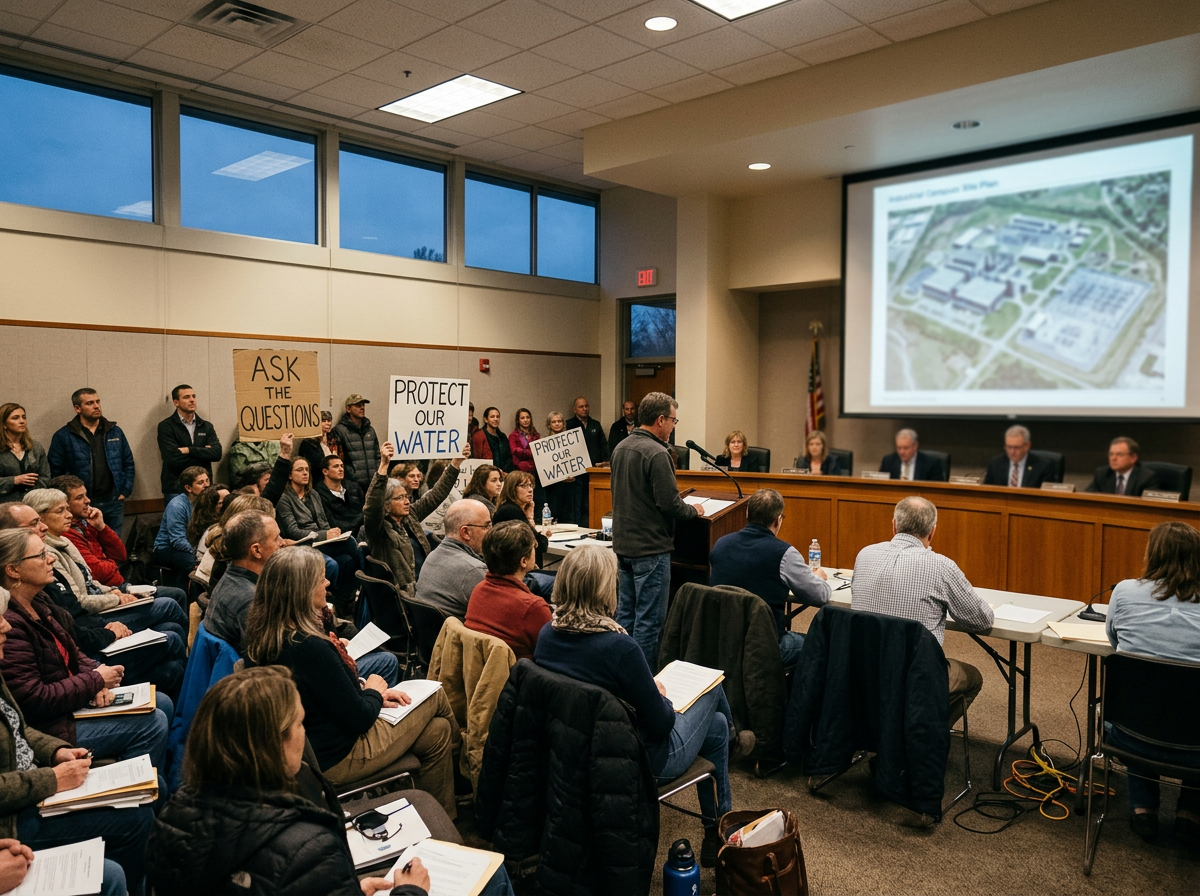
Somewhere along the way, “community opposition” moved from a footnote in the risk register to a standing agenda item in the conversations I have with developers and corporate clients. Not because every project draws a crowd, but because enough of them do that nobody can afford to assume theirs will not.
I wrote recently about what communities owe the public before a data center comes to town. This post is the other half of that conversation. It is for the people on the developer and site selection side of the table, and for the EDOs who have to sit across from them: what is the opposition actually telling you, and what should you do with that information before you ever file anything?
Opposition Is Data
The instinct, when a room full of residents shows up angry, is to treat it as noise. A vocal minority. A messaging problem. Something to be managed with a better slide deck.
Sometimes that is true. More often, the opposition is the most honest market research you will get about a location, delivered for free and at volume.
When I advise a client on a site, I am trying to answer one question: can this project actually get built, on this timeline, at this cost? Opposition is a direct input to that answer. It tells you which parts of your project the community does not trust, which parts of the approval process are vulnerable, and which officials are likely to be standing with you when the vote happens, and which will quietly find a reason to be absent.
“A site with perfect power and a hostile public is not a good site. It is a delayed one.”
And in this business, delay is just a polite word for expensive.
What the Record Shows
If this still sounds like anecdote, look at the tracking data.
Data Center Watch, which monitors local opposition to data center projects, counted at least 75 U.S. projects worth roughly $130 billion blocked or delayed in the first quarter of 2026. In the second quarter, it counted at least 45 more, worth nearly $68 billion. Two quarters in a row at that level is not a blip. It is a new operating environment.
Two details in the Q2 findings matter more to me than the dollar figures:
Moratoriums are arriving before the projects do. Communities across the country have imposed data center moratoriums preemptively, before a developer expressed interest or filed anything. That changes the site selection math. You may no longer be reacting to opposition. You may be walking into a rule that was written before you showed up.
The fight is moving to the statehouse. The same report found that 30 statehouses introduced, and many adopted, legislation or executive actions on data center siting, electricity and water constraints, and infrastructure cost-sharing. Local opposition is becoming state policy.
Closer to home, the pattern is just as visible. Shelby County, Indiana, commissioners approved a data center moratorium in February to buy time to write an ordinance. In Fort Wayne in October, a proposed 365-day moratorium failed on a 4-4 city council tie, which tells you how evenly divided even a mid-sized Indiana city can be on this question. A tie vote is not a mandate for developers. It is a preview of the next hearing.
And for anyone who assumes an early filing is a safe harbor, consider Ohio. The Ohio Supreme Court ruled this fall in favor of the Village of Lordstown, which had stopped reviewing a data center developer's site plans after adopting a moratorium. Filing first did not guarantee the right to proceed. If your timeline depends on a pending application outrunning a moratorium, that is a bet, not a strategy.
The Anatomy of Pushback
Not all opposition is the same, and treating it as one thing is how teams misread it. In my experience it tends to show up in three distinct forms.
1. The Concerned Neighbor
This is the resident who lives near the proposed site and has specific, practical worries: noise, lighting, traffic during construction, what happens to their property value, what the view looks like in five years. These concerns are local, concrete, and usually answerable.
This group is also the one most often mishandled, because the concerns sound small compared to the size of the project. They are not small to the person who has to live next to them. Dismiss them and you do not shrink the opposition. You recruit it.
2. The Skeptical Ratepayer
This resident may live nowhere near the site. Their worry is about the electric bill, the water system, or the community's capacity to absorb a very large new customer. They are asking whether the deal shifts risk onto everyone else.
This is a structural concern, and it requires a structural answer. Talking points will not get you there. Utility tariffs, minimum demand charges, and clear commitments about who pays for infrastructure will. If you do not control those terms, then the honest move is to say so and bring the people who do into the conversation early.
3. The Organized Campaign
Eventually, one of the first two groups gets organized. A Facebook group becomes a yard sign campaign. A yard sign campaign becomes a coalition with a name, a spokesperson, a lawyer, and a calendar of every public meeting for the next six months.
By the time you are dealing with an organized campaign, you are no longer in a communications exercise. You are in a land use fight, and the other side has learned the procedural levers: public comment, continuances, appeals, referenda where they are available, and pressure on elected officials who face voters sooner than the project faces construction.
The most important thing I can tell you about the third group is that it almost always starts as the first or second. The campaign is a symptom. The cause was something nobody answered when it was still a question.
Why Secrecy Is a Self-Inflicted Wound
I understand confidentiality better than most. I have protected confidential projects on the public side, and I have required confidentiality on the private side. Large corporate site searches have legitimate reasons to stay quiet. Competitors, land prices, and employee announcements all depend on it. Strict NDAs are part of how this industry works, and I am not suggesting that changes.
But here is the tension nobody likes to say out loud: the same secrecy that protects the project in the early stages becomes a liability the moment the public finds out. A project that surfaces first as an agenda item, a rezoning request, or a leaked memo arrives with a narrative already attached. Residents did not hear about it from the developer or the EDO. They heard about it from a neighbor, and the neighbor's version is rarely the generous one.
The fix is not to abandon confidentiality. It is to plan the transition out of it. Before the project becomes public, know:
- Who needs to hear it first, and in what order (elected officials, the utility, adjacent property owners, the school district)
- What the full fiscal and infrastructure picture looks like, on one page, in plain English
- What you are willing to commit to in writing, and what you are not
- Who will stand up in the room and answer questions, and whether they are prepared to say “I do not know yet” without flinching
The goal is not to avoid scrutiny. It is to make sure that when scrutiny arrives, the community is looking at facts you put on the table rather than gaps you left open.
What Experienced Developers Are Doing Differently
I have noticed a pattern. The developers who navigate opposition well tend to do a handful of unglamorous things consistently.
They screen for community readiness, not just site readiness. Zoning status, past approvals of comparable projects, the track record of the planning commission, whether local leadership has publicly supported or opposed similar development. These are now part of the diligence package alongside the power study.
They engage early and in person. Not a mailer. Not a website. A conversation, in a room, with people who can ask follow-up questions. It is slower and less scalable, and it works.
They offer specifics before they are asked. Peak water demand in gallons per day. Independent acoustic modeling. A fiscal impact summary that shows the first year and the thirtieth. A decommissioning plan. Specifics are the antidote to suspicion.
They accept constraints. Setbacks, noise limits, water commitments, community benefit agreements, and local hiring or training commitments. The projects that come out of a contentious process with a few self-imposed limits tend to be the ones that make it through. The ones that insist on zero concessions tend to learn how many ways a project can be delayed.
They know when to walk away. This one gets less airtime, but it matters. A good advisor will tell a client when the opposition is organized, durable, and aimed at a decision-maker who cannot be moved. Sometimes the right call is a different site. A project that spends fourteen months fighting for an approval it eventually loses has lost far more than the site.
What EDOs Should Be Asking
If you are on the economic development side, your position is uncomfortable. You are asked to attract investment, protect confidentiality, maintain public trust, and keep elected officials informed, often with a small staff and a lot of competing demands.
A few questions worth asking before a project lands on your desk:
Do we have a position? Many communities have never actually decided whether they want data centers, what kind, where, and under what conditions. If the first time your community debates that is in response to a specific project, the debate will be about the project, not the principle. That is a harder conversation to win.
Does our zoning say what we think it says? Check whether your ordinances address data centers by name, or whether they get treated as generic industrial or commercial uses. Gaps in the code become gaps in public confidence.
Have we talked to the utility? Not “do they have capacity.” Have we talked about tariff structure, ratepayer protections, and what the utility would need to see before it commits to serving a very large load?
Who is our credible local voice? Every community has people residents trust. They may not be on your payroll, and they may not be in your office. Find out who they are before you need them.
What will we say when the answer is no? Sometimes the right answer for a community is to decline. An EDO that has thought through its criteria can say no with confidence and without apology. One that has not will say yes under pressure and regret it later.
The Point
None of this means data centers are bad for communities, or that opposition is always right. Many of these projects are strong tax base investments, and many communities will be better off with them. I have spent my career in the business of helping projects happen, and I intend to keep doing that.
But the old assumption, that approval is a formality and the real work is power and land, has stopped holding. Community acceptance is now part of the site's fundamentals, as real as the substation and as measurable as the water allocation.
The opposition is going to tell you something about your project. You can listen early, when it is a handful of questions, or you can listen late, when it is a campaign.
I have yet to meet a developer who wished they had heard it later.
Weighing a Location or Preparing Your Community?
Hyphen Strategies advises corporate clients and economic development organizations on data center siting, utility readiness, and community engagement strategy. If you are weighing a location or preparing your community for a large-load project, start a conversation.
Start a Conversation