
For about a decade, the data center announcement followed a comfortable script. A hyperscaler picked a site. A governor or mayor stood at a podium. Someone held oversized scissors. A local paper ran a photo, and everyone went home feeling like they had won something.
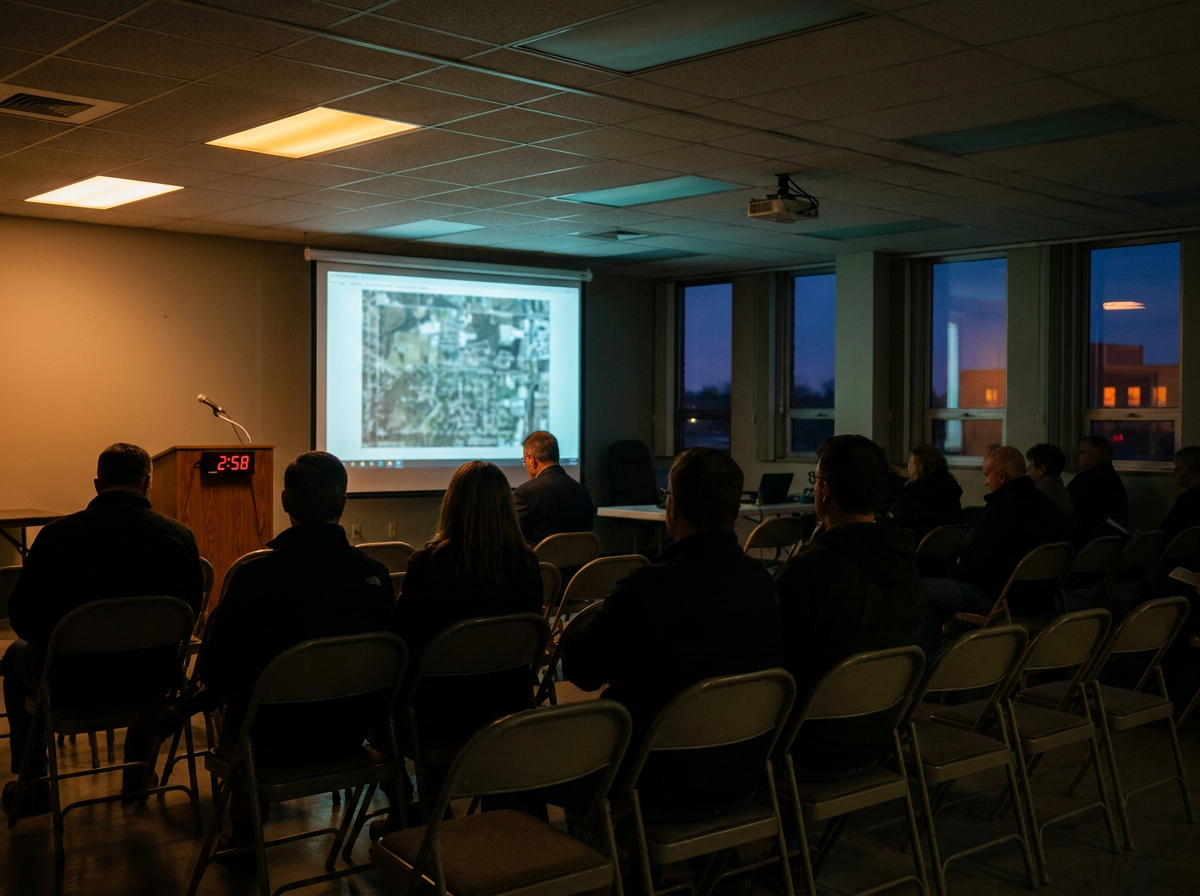
That script is being rewritten in real time, and the rewrite is happening in county meeting rooms with bad lighting and a sign-in sheet for public comment.
I call it the hyperscaler hangover. Communities that said yes to big announcements are waking up and asking what, exactly, they agreed to. Communities that have not said yes yet are watching them and taking notes. If you work in economic development, the room you need to win is no longer just the one with the site selector and the conference table. It is the one with folding chairs and a three-minute timer on each speaker.
“The zoning meeting is the new site visit.”
And most of us are showing up unprepared.
The Old Playbook Is Now a Liability
I have sat on both sides of this process. On the public side, I know how it feels to protect a confidential project while knowing the community will eventually have questions. On the private side, I know what a developer needs in order to move: power, land, speed, and a path to approval.
The tension is real, and it is not new. What is new is the volume.
Data center projects now carry a profile that a typical manufacturing announcement never did. They are enormous, they are often confidential until late in the process, they touch the electric grid that every household shares, and they arrive in communities that have never hosted anything like them. When you combine scale, secrecy, and a utility bill, you get a perfect recipe for suspicion.
And here is the part that stings. A lot of that suspicion is our doing.
For years, the economic development pitch for data centers borrowed the language of factories: jobs, jobs, jobs. It was the easiest story to tell, so we told it. Then residents did the math themselves, noticed that a billion-dollar building was going to employ a few dozen to a couple hundred people, and concluded they had been sold something.
They were not lied to, exactly. They were pitched the wrong product.
Four Concerns. Four Honest Answers.
When I listen to public comment at these hearings, the same four concerns come up again and again. They are not irrational, and they are not going away. Here is how I think communities should respond.
1. Water
This is the most emotional concern and the one most often answered with a shrug. “Our developer uses closed-loop cooling” is not an answer by itself. It is a talking point.
Residents want to know how much water the facility will draw, from what source, in what season, and what happens in a drought. Cooling design varies widely between projects, and some designs trade water use for electricity use. That tradeoff is worth explaining out loud.
What to do: Get the actual projected water demand in writing, in gallons per day at peak, and compare it to something the public understands. Ask the developer what the facility does during drought restrictions. If the answer is “we are still finalizing the design,” then say exactly that, and tell the public when the answer will be available. Which brings me to a rule I will repeat later: unquantified risk reads as hidden risk.
2. Noise
Nobody puts “constant low-frequency hum” in the project renderings. Residents know this. If a site is near homes, a school, or a park, noise will be one of the first things people raise, and they will remember if it was dismissed.
What to do: Ask for an independent acoustic study, not a summary from the developer. Understand where mitigation is physical (walls, equipment placement, setbacks) and where it is just a promise. Put measurable limits into the development agreement so there is something to enforce.
3. Tax Breaks
This one catches economic developers off guard because it feels like our home turf. Incentives are our job. But the public hears “tax break” and “billion-dollar company” in the same sentence and draws a straight line.
I have written before about why comparing incentive packages by face value is the wrong analysis. The same principle applies here. The question is not how big the abatement is. The question is what the community gets over the life of the deal, when it gets it, and what happens if the project does not perform.
What to do: Show the full fiscal picture, not just the headline abatement. What does the community receive in the years during the abatement, such as payments in lieu of taxes, infrastructure contributions, or fees? What does it receive after? Who pays for the roads, water, and public safety capacity that the project requires? If you cannot answer that on one page, you are not ready.
4. Jobs
This is where the old pitch breaks down most visibly, so let me be direct.
Data centers are tax base projects, not job creators. They can be excellent tax base projects. A facility with a large assessed value and modest service demands can fund schools, roads, and public services without adding many new households to the rolls. That is a real and defensible benefit. But it is a different benefit than the one we promised for decades, and pretending otherwise will cost you credibility in the first five minutes of public comment.
There are meaningful jobs tied to construction, and there are permanent operations and contractor roles. Be specific about what is temporary and what is permanent. If the headline number includes construction trades for a two-year build, say so.
What to do: Lead with tax base. Be precise about job counts and duration. Let the economic story be the one that is actually true.
The Part Nobody Wants to Talk About: Ratepayers
Of everything the public worries about, the electric bill is the one that touches every household, and it is the one most EDOs are least equipped to discuss.
If you have read my earlier posts on the interconnection queue and behind-the-meter power, you already know that power is the real deal. A data center does not just consume electricity. It can reshape how a utility plans generation and transmission for years. The question residents ask, usually without the technical vocabulary, is simple: will my bill go up because of this?
The honest answer is “it depends on how the deal is structured,” and that is exactly why structure matters. Three mechanisms are worth understanding:
- Dedicated utility tariffs. Large-load customers can be placed on their own rate class so that the costs of serving them are assigned to them, not spread across every home and small business.
- Minimum demand charges. These require the customer to pay for a baseline level of capacity whether or not it actually uses it. This protects other ratepayers if the customer scales back or never reaches projected load.
- Exit fees and long-term commitments. If a facility closes or downsizes, the infrastructure built to serve it does not disappear. Exit provisions help ensure the customer, not the community, holds that risk.
Not every EDO controls these terms. Utilities and state regulators do. But EDOs are often the ones in the room who can ask the questions, bring the utility to the table early, and make clear that the community expects ratepayer protections to be part of the conversation. If you are only learning what the tariff looks like the week of the hearing, you have already lost time you will not get back.
What a Site Selector Learns From a Bad Zoning Meeting
Here is the dual-sided perspective I keep returning to.
When I advise a corporate client on a location, I am not only evaluating whether a site works on paper. I am evaluating whether the project can actually get built on the timeline we have assumed. Community opposition is now a schedule risk, a cost risk, and in some cases a fatal flaw. A site with perfect power and a hostile public is not a good site. It is a delayed one, and delay is expensive.
That means a community that handles the public process well has a genuine competitive advantage. A county that can say, “Here is our water analysis, here is our tariff structure, here is our fiscal impact summary, and here is how we engaged residents before the first filing,” is a county a developer can underwrite with more confidence.
The reverse is also true. I have seen otherwise attractive locations lose momentum because the first time the public heard about a project was the night it appeared on a zoning agenda. By then, the narrative was already written and the developer was the villain.
And the economic developer? Often the scapegoat. I have said this elsewhere, and I will say it again here: the local economic developer does an enormous amount of invisible work, and when a controversial project lands, that person is the one standing in front of an angry room. They deserve better preparation, and they deserve support.
Unquantified Risk Looks Like Hidden Risk
I want to connect this to something I talk about constantly with RFI responses. When a site selector sees “TBD” in a response, they do not read it as “we are still working on it.” They read it as “we do not know, and we hope you will not ask.”
The public reads vague answers the same way.
“We are studying that” and “details to come” are fine in an early-stage conversation, as long as you say when the details will come and who is responsible. What breaks trust is a pattern of confident reassurance with no numbers behind it. The same instinct that fails an RFI will fail a public hearing.
Borrow the “No, But” approach. If the honest answer to a question is a constraint, state it plainly and pair it with what is being done about it.
- “Yes, the facility will draw significant water at peak. Here is the projected volume, here is the source, and here is the drought contingency in the agreement.”
- “No, this will not create a large number of permanent jobs. Here is what it will do for the tax base, and here is what that funds.”
A direct answer with a limitation attached is more believable than a flawless answer with nothing behind it.
The Honest Data Center Readiness Sheet
Before you step up to the microphone, fill this out. If you cannot complete a line, that is your homework. If the developer will not provide the information, that is useful information too.
Hyphen Strategies
The Honest Data Center Readiness Sheet
Project and Process
- When and how will the public first hear about this project, and who is telling them?
- Who is the single accountable spokesperson for the community?
- What has been communicated to adjacent property owners, and when?
Water
- Projected water demand at average and peak, in gallons per day
- Water source and the provider's confirmed capacity
- Cooling approach and the tradeoff it makes with electricity use
- Drought and emergency curtailment provisions
Noise and Land Use
- Independent acoustic study completed or scheduled
- Setbacks, sound limits, and enforcement mechanisms in writing
- Lighting, traffic, and construction impacts identified
Power and Ratepayers
- Utility confirmation of capacity and delivery timeline
- Tariff structure for the facility, including minimum demand charges
- Exit or early-termination provisions
- Plain-language statement on expected impact to residential rates
Fiscal Impact
- Full picture of abatements, PILOT or fee payments, and infrastructure contributions over the life of the deal
- Public infrastructure the community will need to fund, and who pays
- One-page summary a resident can read in two minutes
Jobs
- Construction jobs, with duration
- Permanent jobs, with roles and wage ranges
- Honest statement on local hiring expectations
Accountability
- Performance commitments and what happens if they are missed
- Clawback or recapture terms
- A compliance calendar so someone owns follow-through after the ceremony
If you can answer every line, you are more prepared than most. If you can answer half, you know where to start.
Think Past the Ribbon Cutting
One more thing, because it connects to the long game.
The public conversation does not end at approval. It resumes at month eighteen, when the compliance report arrives and someone asks why the numbers do not match the announcement. Missed targets are rarely villainy. More often it is delayed switchgear, a shifting labor market, or a supply chain surprise. But if the community was never told what the commitments were, or if no one is tracking them, a delay looks like a betrayal.
Build the accountability structure before you sign, not after you are embarrassed. A clear performance agreement, honest recapture terms, and a named owner for compliance are not hostile to the developer. They are what make the deal durable.
The Bottom Line
Data centers are not going away. The demand behind them is real, the capital is real, and some communities are going to benefit enormously from hosting them. But the communities that benefit most will not be the ones that move fastest through the announcement. They will be the ones that earned the public's trust before the first hearing.
Here is how I would summarize the job in front of every economic developer, county leader, and elected official:
- Tell the truth early. The public will find out. It is better coming from you.
- Sell what is real. If it is a tax base project, say so and prove the math.
- Get the numbers in writing. Water, power, noise, fiscal impact. Unquantified risk looks like hidden risk.
- Protect the ratepayer. Press for tariff structures that put the cost of serving large loads on the customer who created it.
- Plan for month eighteen. Accountability after the ribbon cutting is part of the deal, not an afterthought.
Site selectors are people, and so is the person at the microphone on public comment night. They have a water bill, a power bill, and a view out their kitchen window. Treat that as part of the project from day one, and you will be a better partner to the developer, too.
Is Your Community Ready for the Hearing?
Hyphen Strategies helps economic development organizations, utility ED teams, and corporate clients get ahead of the public process, from readiness assessments to ratepayer-protection frameworks to deal structures built for the long term. We have sat on both sides of this table, and we will tell you plainly where you stand.
Request a Data Center Readiness ReviewWant to hear more? Listen to the full discussion on the Site Selectors Are People, Too podcast: The Hyperscaler Hangover: Surviving the Zoning Meeting.