
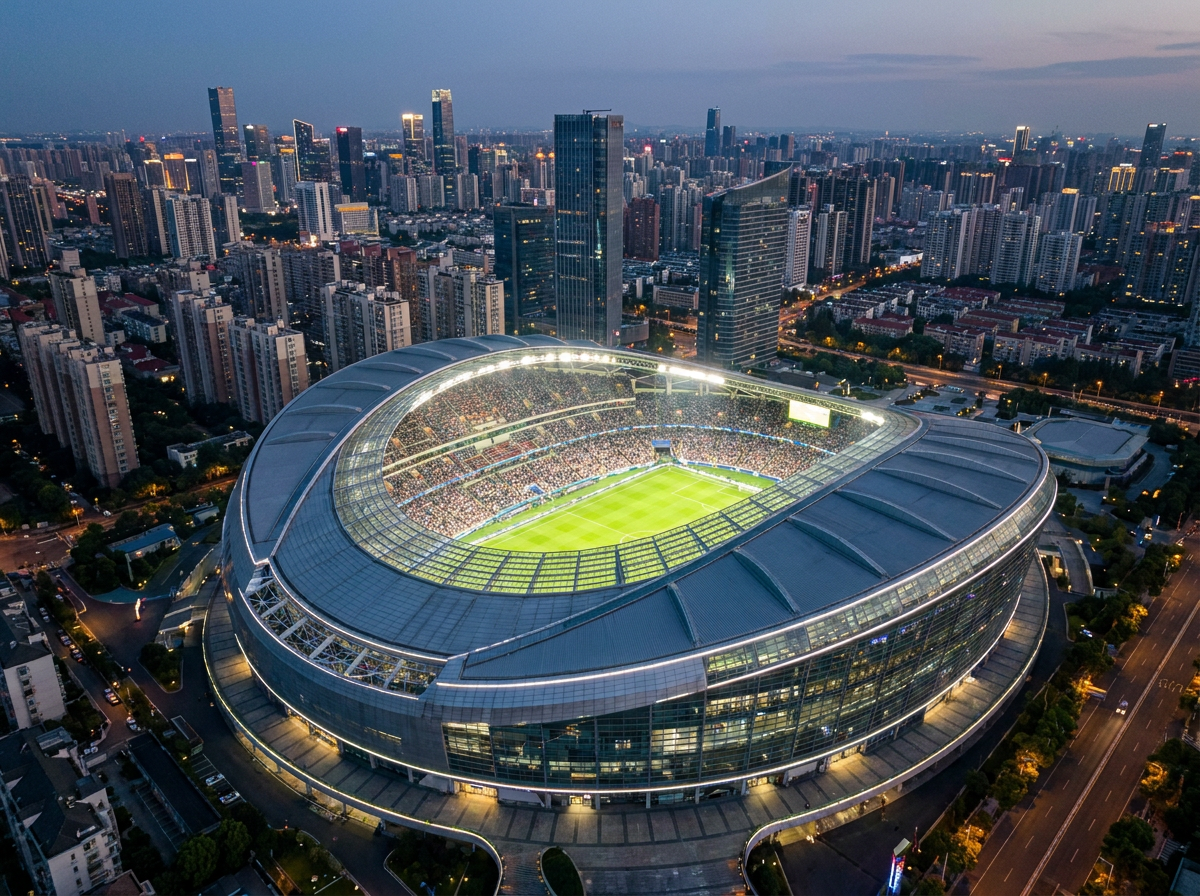
The FIFA World Cup is the most-watched sporting event on the planet, and for the cities and nations that host it, the tournament represents a once-in-a-generation opportunity to reshape infrastructure, attract global investment, and put themselves on the world stage. But the path from aspiring host to opening ceremony is long, expensive, and increasingly complex. Here's what government and civic leaders should understand about how the process works — and what it takes to compete.
How FIFA Chooses a Host
FIFA's host selection process begins roughly seven years before kickoff. The organization's 211 member associations are invited to submit bids, which the FIFA Council evaluates and narrows to a shortlist of up to three. The final decision goes to FIFA Congress, where members vote using an exhaustive ballot system.
Bids are scored on a weighted scale: infrastructure accounts for 70 percent of the evaluation and commercial potential for the remaining 30 percent. Stadiums carry the heaviest weight within the infrastructure category. The bar is high — hosts must provide at least fourteen all-seater stadiums with a minimum capacity of 40,000, with a strong preference for pre-existing venues. The opening match and final require an 80,000-seat venue, and semi-finals demand 60,000.
Beyond stadiums, FIFA evaluates transportation networks, hotel capacity, telecommunications, safety and security plans, and sustainability commitments. A critical component is the Government Declaration — a formal set of guarantees from the head of state covering administrative, operational, and fiscal support. Without it, a bid is dead on arrival.
Since 2023, FIFA has also adopted a confederation rotation principle, ensuring hosting opportunities circulate among its six continental confederations. This shaped the recent decisions: the 2026 World Cup goes to the United States, Canada, and Mexico; 2030 to Morocco, Portugal, and Spain (with centenary matches in Argentina, Paraguay, and Uruguay); and 2034 to Saudi Arabia.
The Economic Calculus
The economic promise of hosting is enormous — on paper.
The 2026 World Cup is projected to contribute up to $40.9 billion in global GDP and create over 800,000 jobs. U.S. host cities like Atlanta, Dallas, and Houston expect a combined $3–4 billion in local economic impact.
But civic leaders should read the fine print carefully. Infrastructure costs have a history of ballooning: Qatar spent an estimated $220 billion for 2022, and Brazil's 2014 tournament cost $11.6 billion in stadium construction, transportation upgrades, and airport improvements — largely funded by public dollars. An Oxford Economics study of 2026 host cities found that job gains would be “marginal” and “short-lived,” concentrated almost entirely in leisure and hospitality.
The structural tension is straightforward. Host cities absorb the heaviest costs — security, infrastructure, logistics — while FIFA captures the most lucrative revenue streams: broadcasting rights, sponsorships, ticket sales, and merchandise. The 2026 cycle mitigates some of this because most U.S., Canadian, and Mexican venues already exist, but cities still face substantial outlays for transit improvements, fan zones, and public safety.
For civic leaders weighing a bid, the honest question isn't whether hosting generates economic activity — it does. The question is whether that activity justifies the public investment compared to alternative uses of the same funds.
Controversies and the Push for Reform
FIFA's hosting decisions have been shadowed by corruption for decades. The awarding of the 2018 World Cup to Russia and the 2022 tournament to Qatar triggered the 2015 FIFA corruption case, the resignation of president Sepp Blatter, and criminal indictments of senior officials.
The organization has since introduced reforms. The 2026 bidding process was the first to require human rights due diligence — bidding countries had to disclose human rights risks and submit a strategy to address them. The evaluation process became more transparent, with published scoring criteria and independent assessment.
Still, skeptics point to the 2034 decision as evidence that reform remains incomplete. Saudi Arabia was confirmed as host through an uncontested process, raising concerns from human rights organizations about labor conditions, LGBTQ+ rights, and women's freedoms. The pattern of awarding tournaments to nations with significant human rights concerns continues to draw scrutiny from watchdog groups, media, and fans alike.
That scrutiny does not spare host cities, even in countries with stronger human rights records. For civic leaders, the reputational dimension of a World Cup bid cuts both ways. Hosting can burnish a city's global image, but the process itself invites intense public scrutiny of governance, labor practices, and social equity.
What Makes a Bid Win
Cities and nations that succeed in the bidding process tend to share several characteristics.
Existing infrastructure. The less you need to build, the stronger the bid. FIFA's scoring heavily rewards pre-existing stadiums, transit systems, and hotel capacity. The United 2026 bid succeeded in part because it could point to dozens of major stadiums and well-established transportation networks across three countries.
Ironclad government backing. The Government Declaration isn't a formality — it signals political will and fiscal commitment. Bids with fragmented political support or conditional guarantees are at a disadvantage.
A compelling narrative. The centenary angle helped secure Uruguay, Argentina, and Paraguay a role in 2030. Co-hosting bids have become increasingly common, allowing smaller nations to pool resources and present a broader geographic and cultural story.
Regional coalition-building. With 211 FIFA members voting, diplomatic relationships matter. Successful bidders invest heavily in building support across confederations, particularly among smaller member associations whose votes carry equal weight.
Human rights and sustainability planning. Post-reform, bids that proactively address labor standards, environmental impact, and community benefit have an edge — or at minimum, avoid a disqualifying vulnerability.
The Bottom Line
Hosting the FIFA World Cup remains one of the most ambitious undertakings a city or nation can pursue. The potential rewards — global visibility, infrastructure modernization, civic pride — are real. But so are the risks: cost overruns, uneven economic returns, and reputational exposure.
For government leaders considering a bid, the most important step is an honest internal assessment. Do you have the infrastructure foundation? The political consensus? The fiscal capacity to invest without shortchanging other priorities? And critically — can you articulate a vision for long-term legacy that extends beyond the final whistle?
The cities that answer those questions clearly are the ones that tend to win — and the ones most likely to look back on hosting as a success.
Working through a major public investment decision and want an outside perspective on the economics?
Start a Conversation